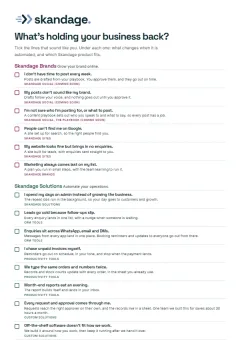
Think back to how a small business ran its social media not very long ago. Someone, usually the owner, opened Instagram on a Sunday night, stared at an empty caption box, and wondered what on earth to say. Then they scrolled competitors for ideas, hunted for a decent photo, wrote three drafts, and posted. Then they did it all again on Wednesday.
If that sounds painfully familiar, this post is for you. We'll walk through how social media marketing used to work, why it quietly ate so many hours, what AI and automation have changed, and where a human still matters most.
The old way: every post was a small project
Before scheduling tools and AI drafts, a single post meant a chain of manual jobs. Nothing in the chain was hard. The trouble was that it never ended, and any missed link meant a week of silence.
Then: the manual week
- SunScroll competitors and trending tags for ideas
- MonWrite captions from scratch, hunt for photos
- TueEdit, resize and crop for each platform
- WedRemember to post, at the right time, by hand
- FriCheck which posts worked, by eye, if there's time
Now: the assisted week
- OnceSet your brand voice and goals in a playbook
- MonA draft calendar is ready from that playbook
- MonYou edit, approve or bin each draft
- AutoApproved posts go out on schedule
- FriResults are tracked for you, so you do more of what works
Trend research was a part-time job
Knowing what to post meant watching what everyone else posted. You'd keep tabs open on competitors, note which hashtags were climbing, and try to guess whether a format was about to fade. By the time you'd spotted a trend, drafted something and posted, it was often already stale.
Consistency was the real enemy
Most small businesses didn't fail at social media because their content was bad. They failed because week six was busy, the posting slipped, and the account went quiet. Algorithms reward regular activity, and customers read a silent profile as a closed business.
Measuring it was guesswork
Without a tidy view of results, "did that post work?" was answered by feel. Likes felt good, but nobody could say whether the posts brought in a single enquiry.
What AI and automation changed
Three things shifted at once. Drafting became fast, scheduling became hands-off, and tracking became automatic. None of them replaces having something to say. All of them remove the grind of saying it.
1. Drafting from a blank page became editing a draft
Editing is a much lighter job than writing. When a draft already exists in roughly your tone, your effort goes into deciding what's true and what's on-brand, not wrestling for the first sentence.
2. Research became a summary, not a scroll
Instead of an evening of scrolling, AI tools can surface what's performing in your niche and suggest topics that fit your calendar. You still choose, but you're choosing from a shortlist.
3. Posting and tracking run in the background
Scheduling means a post goes out on Thursday at 6pm whether you're free or not. Tracking means that on Friday you can see which posts brought people in, without exporting anything.
Is this just hype? What the numbers say
Adoption is already the norm. In Ahrefs' 2026 survey of marketing and SEO professionals, 93% said they use AI to create or help create content, up from 87% the year before. Just as telling, 89% of those users manually check the output, up from 80%. People are not handing the wheel over. They're using AI to go faster and still reviewing what goes out.
Time savings are reported across several surveys, though the figures vary a lot by who was asked. Adobe's March 2026 survey of more than 800 US marketers and creatives found most respondents saved several hours a week with AI in their workflow. Treat any single "hours saved" headline with some caution: many come from tool vendors, and a small business posting three times a week will not save what a large team does.
What should stay human
This is where most "AI will do your marketing" pitches go quiet, so let's be direct. Automation is brilliant at repeating and drafting. It is poor at the things your customers actually remember you for:
- Your point of view. The opinion only you would have after ten years in your trade.
- Real stories and photos. The job you just finished, the customer who came back.
- The final yes. Facts, prices and tone are yours to check before anything goes live.
- Replies. A real person answering a real comment builds more trust than any scheduled post.
The best setup treats AI as a fast junior who drafts and organises, with you as the editor-in-chief.
How Skandage Social fits in
This is the exact idea behind Skandage Social, which is coming soon. We start by writing a brand playbook with you, covering your audience, your voice and your goal. The platform then drafts posts from that playbook, and you approve every post before it goes out. Approved posts are scheduled for you, and you can see which ones bring people in.
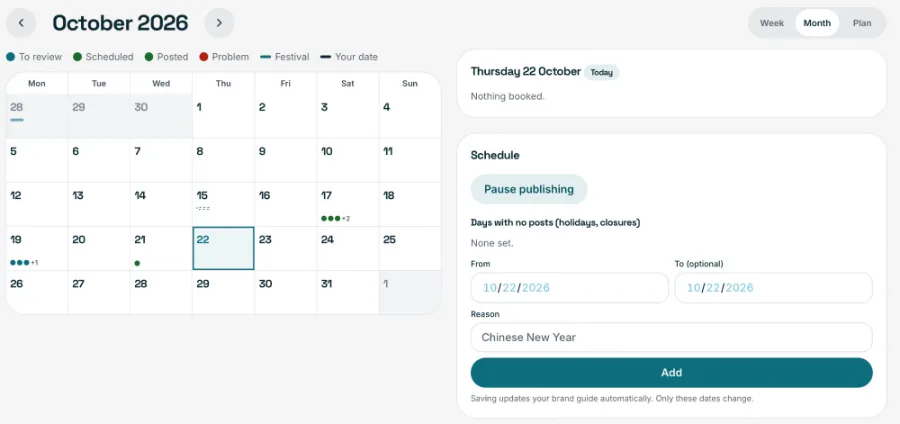
Here are real screens from the product. First, the calendar where drafts and scheduled posts live:
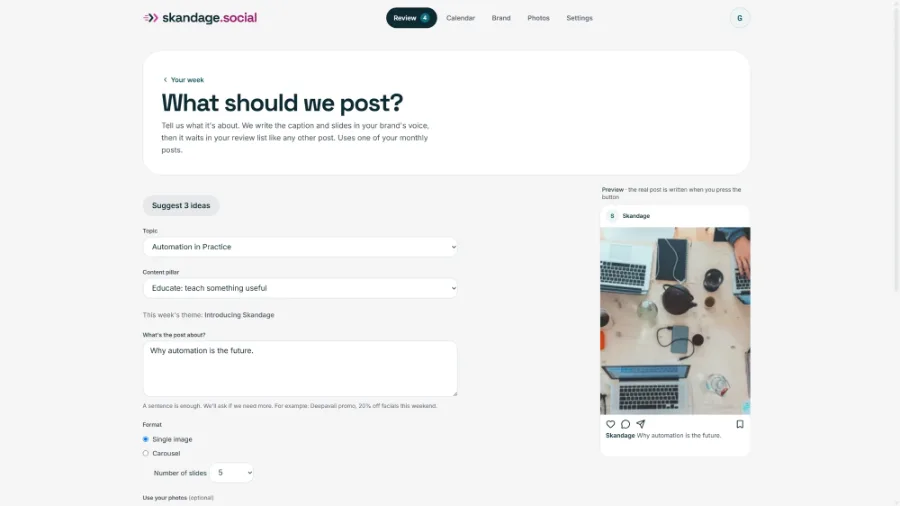
Next, the post creator, which turns a topic into a draft you can edit, approve or bin:
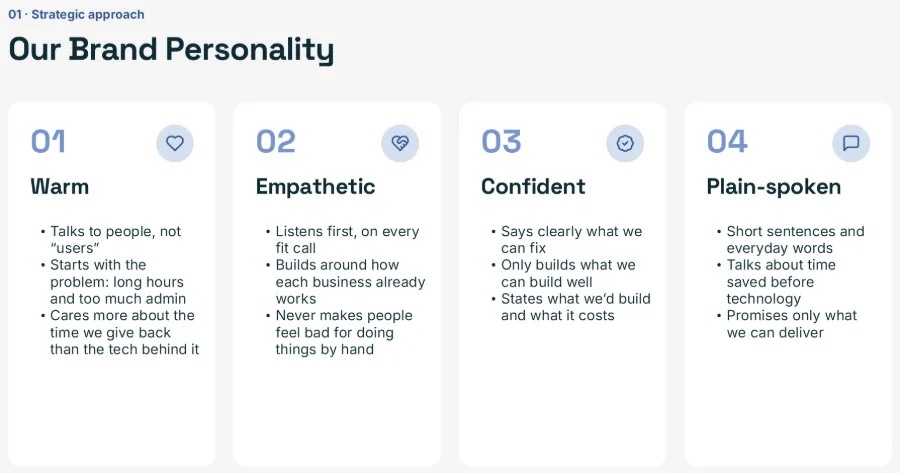
And the playbook that keeps every draft sounding like you rather than like a generic AI:
Want the Monday-morning version of social media?
Skandage Social is coming soon for Singapore small businesses. Join the waitlist and we'll tell you when it opens.
Join the Skandage Social waitlistA simple way to start this week, with or without us
- Write down your voice. Five adjectives and three phrases you'd never use.
- Pick three content themes. For example: behind the scenes, customer stories, tips.
- Batch it. Draft a week or a month in one sitting, then schedule it.
- Review on Fridays. Note the one post that got a real enquiry and make more like it.
If you want help with the rest of the admin around your marketing too, our Skandage Solutions tools handle things like enquiry follow-ups. Or book a free fit call and tell us what takes up your evenings.
Sources
- Ahrefs, 2026 State of AI in Content Marketing: 93% use AI for content; 89% of users check output manually (survey of about 300 marketing and SEO professionals, collected August 2026).
- Adobe, Creative Pro & Marketer survey, March 2026: time saved with AI in creative workflows.
- Picmim: the 3 to 10 hours a week range for small-business social media. This is a tool vendor, so treat it as directional.
Related: Skandage Social